

PRK vs LASIK vs SMILE: The Difference in Laser Eye Surgery
LASIK, PRK and SMILE are three different procedures, not three names for the same thing, and the right one for you depends on your corneal thickness, your prescription and how stable your eyes actually are, not on which clinic markets loudest. A proper screening should be able to tell you no, and the good clinics do, I found that out myself. Swiss ads often quote laser eye surgery “from” a price per eye, not per person, so the real cost is roughly double the headline number, and once you compare it fairly against typical Turkish pricing for both eyes, the difference still works out to around half.
I looked into laser eye surgery for myself a while ago, curious whether I was even a candidate, and ended up learning far more about PRK vs LASIK vs SMILE than I expected to from inside real clinics in Istanbul and Antalya. What surprised me most was not the technology. It was how differently these three procedures actually work, and how much of what gets marketed as “the best option” really depends on your own eyes, not on whichever machine a clinic happens to own.
If you are trying to work out the actual difference between LASIK, PRK and SMILE, whether you are even a good candidate, or why the same procedure seems to cost wildly different amounts depending on where you look, this is everything I wish someone had explained to me clearly before I started asking around myself.
What LASIK, PRK, and SMILE Actually Are
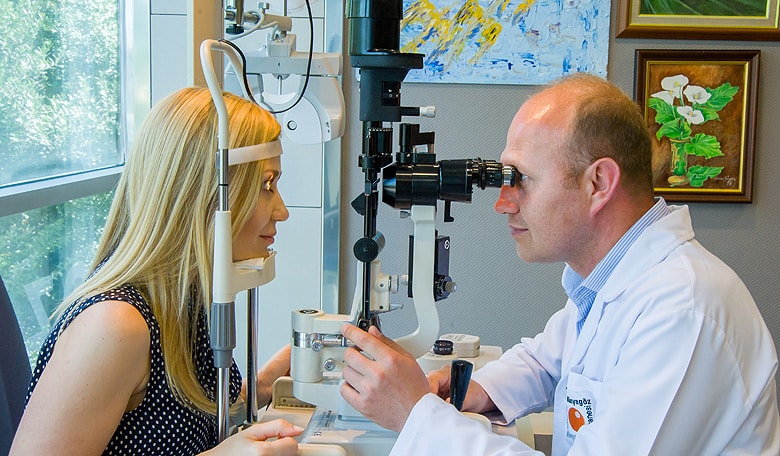
LASIK, PRK, and SMILE all correct your vision with a laser, but how each one actually reaches the cornea is quite different, and that difference is what determines recovery time, risk, and who is actually a good candidate.
What Happens During LASIK Eye Surgery
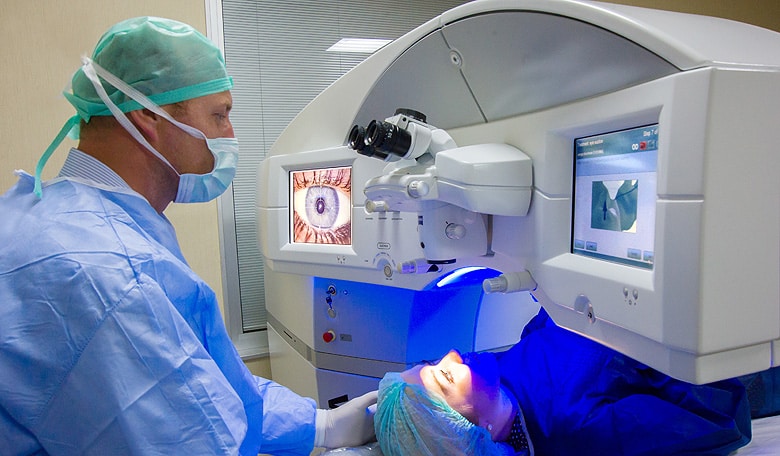
LASIK, short for laser-assisted in situ keratomileusis, is the most well known and most commonly performed type of laser eye surgery. The surgeon uses a femtosecond laser to create a thin corneal flap in the outer layer of the cornea. The flap is lifted, and an excimer laser reshapes the corneal tissue underneath to correct short-sightedness, long-sightedness, or astigmatism. The flap is then placed back down, where it heals naturally without stitches. Because the flap protects the eye during healing, recovery is fast, often within a day or two.
What Happens During PRK Surgery
PRK, short for photorefractive keratectomy, works on the same principle as LASIK, using an excimer laser to reshape the cornea, but without creating a flap. Instead, the surgeon removes the thin outer layer of the cornea before the laser reshapes the surface underneath. This outer layer regrows on its own over the following days. Because there is no flap, PRK takes longer to recover from than LASIK, but it avoids the flap-related risks entirely, which is why it is often recommended for people with thin corneas. A related, older procedure called LASEK works similarly, with a few technical differences in how that outer layer is handled.
What Happens During SMILE Eye Surgery
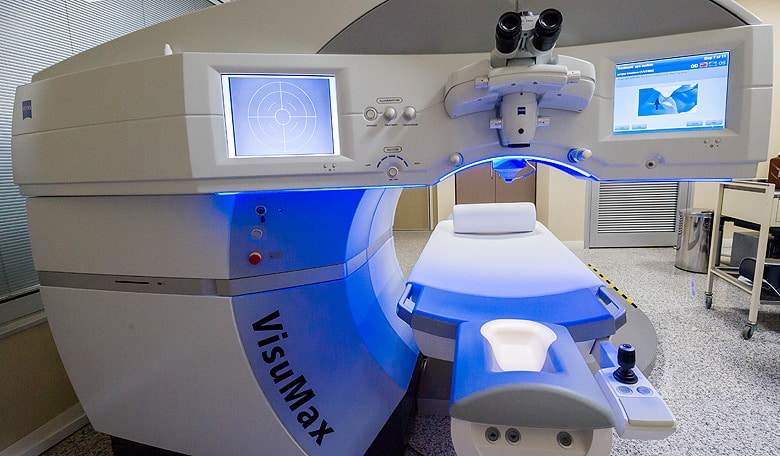
SMILE, short for small incision lenticule extraction, is the newest of the three. A femtosecond laser creates a tiny lens-shaped piece of corneal tissue, called a lenticule, inside the cornea. The surgeon removes this lenticule through a small incision, which reshapes the cornea without creating a large flap or removing the outer layer. SMILE was developed by Zeiss and requires their specific laser equipment, which is part of why it is not offered everywhere.
SMILE vs LASIK vs PRK: Which One Is Actually Right for You
These three names get thrown around almost interchangeably in searches, but they are structurally different procedures, and the right one for you depends less on marketing and more on your cornea thickness, your prescription and how your eyes actually behave day to day.
LASIK vs PRK: The Core Difference
LASIK works by creating a thin flap in the outer layer of the cornea, folding it back, reshaping the tissue underneath with the laser, and then repositioning the flap over the treated area. That flap heals on its own without stitches, which is why LASIK patients often notice clearer vision within a day.
PRK skips the flap entirely. The surgeon removes the outer layer of the cornea completely, and the laser reshapes the surface directly underneath. That outer layer then regrows on its own over the following days. Recovery is slower and the first few days can be more uncomfortable than with LASIK, but there is no corneal flap that has to heal, which matters if your cornea is thinner or if you are more prone to eye injuries later in life.
Both LASIK and PRK can correct myopia and astigmatism. The real decision between them usually comes down to your corneal thickness and how much downtime you can tolerate.
Where SMILE Fits In
SMILE, short for ReLEx SMILE, is the newest of the three and works differently again. Instead of creating a flap or removing the outer layer, the laser shapes a tiny lens-shaped piece of tissue inside the cornea, and the surgeon removes it through a small incision. The surface of your eye stays far more intact than with LASIK or PRK.
That smaller incision is why SMILE is often described as less invasive than LASIK. It tends to involve fewer corneal nerves being cut, which is relevant if dry eye is a concern for you. SMILE is well suited to higher degrees of myopia, though not every clinic offers it, since the equipment it requires is a significant investment, and that is usually reflected in the price.
None of these three is universally “better.” They are different tools for different corneas, and a proper pre-surgery screening should tell you which one actually applies to your eyes, not just which one the clinic prefers to sell.
Dry Eye and Recovery After Laser Eye Surgery
Dry eye is the side effect people underestimate most before laser eye surgery, and recovery time is the one they ask about the least, usually because it gets glossed over in the sales conversation.
Dry Eye Risk by Procedure
Cutting a corneal flap, as LASIK does, also cuts some of the corneal nerves that normally trigger tear production and blinking. That is why dry eye symptoms are more common in the first few months after LASIK than after the other two procedures. For most people this resolves on its own, but it is worth asking directly how the clinic manages it if it does not.
PRK does not involve a flap, but the healing surface still affects tear film in the short term, so some dryness in the first weeks is normal there too. SMILE, because the incision is so much smaller and preserves more of the corneal nerve tissue, is generally associated with a lower dry eye risk than LASIK, which is one of the reasons it gets recommended for people who already deal with dry eyes.
Whatever procedure you choose, expect some grittiness, light sensitivity and mild irritation in the eye during the first hours and days. That is a normal part of healing, not a sign that something went wrong, but it is exactly the kind of eye symptom worth mentioning to your clinic if it does not ease off within the expected window.
How Long Recovery Actually Takes
With LASIK, usable vision often returns within a day, and most clinics see you again the following morning for a check-up before clearing you to travel home. Full stabilization, where your prescription has fully settled, can still take a few weeks.
PRK takes longer up front, since the outer layer of the cornea needs to regrow, which takes three to five days, and vision can stay blurry during that window. Full clarity with PRK often takes longer to arrive than with LASIK or SMILE, even though the long-term results are comparable.
SMILE recovery tends to track closely with LASIK in the first days, with less same-day discomfort thanks to the smaller incision. Across all three, expect to use prescribed eye drops for about ten days, wear protective sunglasses when outdoors, avoid rubbing your eyes, and skip swimming pools and eye makeup for at least a week. None of this is optional if you want the result to hold.
Who Is a Good Candidate for Which Procedure
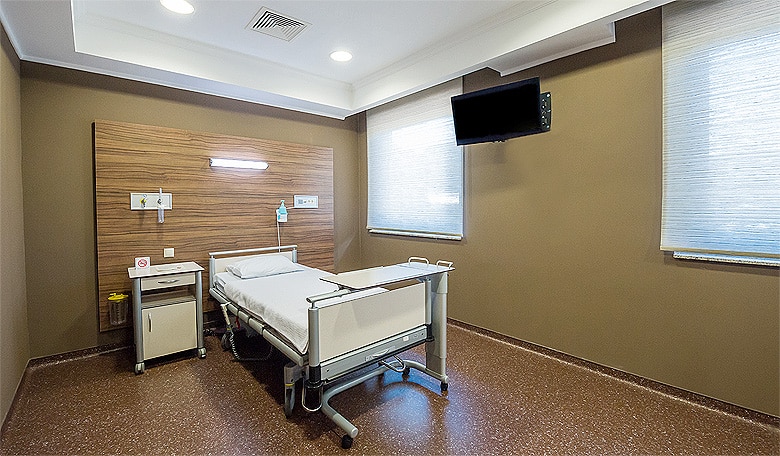
Candidacy is what actually decides which procedure fits you, not personal preference and not which one a clinic happens to push hardest. A proper screening measures things you cannot judge about your own eyes, and it should be the screening, not the sales conversation, that tells you what you qualify for.
When LASIK Makes Sense
LASIK tends to work best if your prescription has been stable for at least a year, your corneal thickness is sufficient to safely create and heal a flap, and your myopia and astigmatism fall within a moderate range rather than at the extreme end. It also assumes you are not pregnant or breastfeeding, since hormonal changes can shift your prescription during that time, and that you do not already have signs of keratoconus or another corneal thinning condition.
If your eyes meet those criteria, LASIK is often the most convenient option, since visual recovery is fast and the day-to-day disruption is minimal. That is exactly why it gets marketed so heavily, but convenience only matters if your eyes are actually suited to it in the first place.
When PRK or SMILE Makes More Sense
PRK becomes the better choice when your cornea is too thin for a safe LASIK flap, or when your lifestyle carries a higher risk of eye trauma, contact sports, physically demanding work, anything where a corneal flap could be dislodged after surgery. Since PRK never creates a flap, that particular risk simply does not apply.
SMILE tends to suit people with higher degrees of myopia, or anyone whose corneal nerves you would rather leave as intact as possible, which is one of the reasons it carries a somewhat lower dry eye risk than LASIK. The tradeoff is availability. Not every clinic has the laser SMILE requires, so it is worth confirming upfront rather than assuming it is on the table.
None of this is something you can accurately judge from a mirror or a quiz. A legitimate clinic will tell you plainly if you are not a candidate for their preferred procedure, even if that means recommending the option that is not their most profitable one.
The Technology Behind Refractive Surgery
The technology inside a laser eye surgery clinic changes faster than most patients realize, and it is one of the few parts of this decision where newer genuinely tends to mean better, safer and more precise. Understanding roughly what you are being treated with helps you ask better questions before you commit.
Custom LASIK and Corneal Mapping
Standard LASIK corrects your prescription using a generalized profile. Custom LASIK, sometimes called wavefront-guided LASIK, starts instead with a detailed map of your individual eye, capturing the small irregularities and higher-order aberrations that a standard prescription does not account for. The laser treatment is then built around that specific map rather than a one-size correction.
That mapping itself relies on corneal topography, a scan that measures the curvature and thickness of your cornea at hundreds of points to build a three-dimensional picture. Beyond planning the treatment, this scan is also what tells a surgeon whether your cornea is thick and regular enough to be a candidate at all, and it is one of the first things a proper pre-surgery screening should include, regardless of which procedure you end up choosing.
SMILE Pro and What’s New in the Technology
SMILE itself has kept evolving. The newer generation, often referred to as SMILE Pro, shortens the actual laser treatment time significantly compared to the original version, which means less time with suction applied to the eye and a more comfortable experience for most patients. The underlying principle stays the same, a small lens-shaped piece of corneal tissue is removed through a tiny incision, but the faster treatment window is a meaningful upgrade if you are anxious about the procedure itself.
Not every clinic has moved to this newer equipment yet, since the laser systems involved are a significant investment. If SMILE is on your shortlist, it is worth asking directly which generation of the technology a clinic is actually using, rather than assuming “SMILE” means the same experience everywhere.
What a Good Surgeon Should Tell You
The consultation itself tells you almost as much as the technology on offer. A good surgeon will be just as clear about what you should not do, or are not a candidate for, as they are about what they can offer you, and that willingness to say no is one of the clearest signals of a trustworthy clinic.
Questions to Ask Before You Choose a Procedure
Ask directly whether you are actually a candidate for the procedure you came in asking about, or whether your corneal mapping points toward a different one, and why. Ask what your mapping actually showed, not just a summary but the numbers themselves, corneal thickness, degree of myopia and astigmatism, and how those translate into the recommendation you are getting.
Ask what the enhancement policy is if your vision is not fully corrected the first time, since this happens occasionally with any of these procedures and a clinic that has already thought this through will have a clear answer rather than a vague one. Ask who handles follow-up care once you are back home, and what happens if you notice something wrong after you have left the country. Ask for a full breakdown of what is included in the quoted price and what is not, diagnostics, medication, the follow-up exam itself, and any technology upgrade the surgeon might recommend once they have actually examined your eyes.
Why Clinic Experience Matters as Much as the Technology
The same laser can be operated by a surgeon who has performed a procedure a few hundred times or a few thousand times, and that difference shows most in the moments a textbook case does not quite apply, a borderline candidate, an unusual corneal shape, something unexpected mid-procedure. Surgical experience is one of the more consistent predictors of outcome across ophthalmology in general, and refractive surgery is no exception.
It is reasonable to ask directly how many years the surgeon performing your procedure, not just the clinic as a whole, has been doing this specific treatment. A clinic confident in its own track record will answer that question without hesitation. One that deflects it, or only talks about the clinic’s overall numbers rather than the individual surgeon’s, is worth a second look before you commit.
“The clinics I trusted most were the ones willing to tell me I was not ready yet, not the ones ready to book me in anyway.”
Nathalie Wiederkehr
Cost Differences Between LASIK, PRK, and SMILE
The price gap between these three procedures is not random. It tracks fairly closely with the equipment involved and how that equipment gets paid for, and understanding that is what turns a confusing price list into something you can actually compare.
Why SMILE Eye Surgery Often Costs More
SMILE requires a specific femtosecond laser system that very few other procedures can use, unlike LASIK and PRK, which run on equipment that is far more widely available across clinics. That equipment represents a major investment for a clinic, and on top of the machine cost itself, manufacturers typically charge a licensing fee for every single procedure performed on it. Both of those costs get passed on to the patient.
Fewer clinics own SMILE-capable equipment in the first place, which also means less price competition pushing the cost down the way it does with LASIK and PRK. The result is consistent across markets, in Switzerland and abroad alike, SMILE is almost always the more expensive of the three, and the gap has more to do with what the clinic pays to offer it than with how much more effective it is for most patients.
What Affects Pricing at Clinics Abroad
A large part of what affects pricing has nothing to do with the country and everything to do with what is actually included in the number you are shown. In Switzerland, you will often see laser eye surgery advertised from around CHF 1’490 per eye for LASIK, or from roughly CHF 2’150 per eye for the SMILE-equivalent procedure, sometimes lower during a promotional period. Look closely and that number is per eye, not for the full treatment. Since nearly everyone has both eyes done in the same session, the real total lands closer to double the advertised figure, and that is still before diagnostics, follow-up visits or a technology upgrade the surgeon recommends after actually examining your eyes are added.
Here is what that looks like side by side, using the current, already discounted Swiss price as the fair baseline, and typical market pricing in Turkey for the same procedures, both eyes included in both columns.
| Procedure | Switzerland, both eyes, current promotion | Turkey, both eyes | Approx. savings |
|---|---|---|---|
| PRK | approx. EUR 2’730 | approx. EUR 1’280 | approx. 53% |
| LASIK | approx. EUR 3’150 | approx. EUR 1’400 | approx. 56% |
| Femto-LASIK | approx. EUR 3’150 | approx. EUR 1’630 | approx. 48% |
| SMILE | approx. EUR 4’550 | approx. EUR 2’100 | approx. 54% |
Even measured against a Swiss price that is already reduced, the gap sits around half. Without the promotion, at the regular Swiss price, the difference is larger still.
What actually affects your final price abroad is not the country itself, but whether the quote in front of you covers the full pre-surgery screening, the surgery, medication, and follow-up care, or only the procedure itself with everything else billed afterward.
Frequently Asked Questions
Why Is Laser Eye Surgery So Much Cheaper in Turkey?
People assume a cheaper price abroad means someone is cutting a corner somewhere. In my own experience walking through clinics in Istanbul and Antalya, that was not the case. The equipment on the floor was the same kind of internationally used laser system you would find in a clinic in Zurich or Munich, not a downgraded version.
What actually changes between countries is everything around the procedure, not the procedure itself. Rent, staff wages, and simply running a clinic cost far less in Turkey than in Switzerland or Germany, and that gap alone explains a large part of the price difference, without anyone on the Turkish side being underpaid by local standards.
On top of that, Turkish clinics perform a very high number of these procedures each year. A surgeon who does this work daily, on equipment that rarely sits idle, works more efficiently than one who does it occasionally, and that efficiency shows up directly in the price. Add in how many well-equipped clinics in Turkey are competing for the same international patients, and none of them can afford to either overcharge or cut corners without losing business fast.
None of this means treatment abroad is riskier, or that the surgeon is less qualified, as long as you have actually checked the clinic’s accreditation yourself. The real risk was never the country. It is choosing the wrong clinic, and that can happen just as easily close to home.
What Is Included (and What Is Not)
A package abroad usually splits into two very different buckets, and mixing them up is exactly how a price ends up looking lower than it turns out to be. On the medical side, a properly built package should already have folded in your full diagnostic work-up, the treatment itself for both eyes, the surgeon’s and operating room’s fees, and the medication and protective eyewear you go home with. None of that should show up later as an extra.
The second bucket is everything around the treatment, where you sleep, how you get between the airport, hotel and clinic, and whether someone is actually available to answer your questions in a language you are comfortable in.
A well-run clinic bundles a few nights of accommodation and your transfers into the price, and keeps a coordinator in contact with you well after your flight home, not just a courtesy call the day after surgery.
What is rarely included, and reasonably so, is your flight there, and any extra nights if you decide to extend your stay. Get all of this spelled out in writing before you agree to anything, a number without a clear list behind it tells you almost nothing.
How to Verify a Turkish Eye Surgery Clinic?
Verifying a clinic starts before you ever get on a plane. Ask for the name of the official body that licenses the clinic or the agency arranging your treatment for international patients, not just a general claim of being “certified,” and expect a straight, specific answer when you ask directly.
Then get specific about the equipment. A clinic that talks about “the latest technology” without naming the actual laser system it uses is being vague on purpose, and that vagueness is worth noting. The same goes for your surgeon, their qualifications and specialist registration should be something you can check independently, not just a paragraph on the clinic’s own website.
One test matters more than any document, though. If a clinic is willing to confirm your exact procedure and price before it has examined your eyes, that tells you they are selling first and assessing second. A proper clinic assesses first. And when you do look at reviews, a realistic, slightly mixed set is more reassuring than a suspiciously perfect one, real patients rarely agree on everything.
How to Get an Accurate Quote?
Before you ask anyone for a number, get your own information in order first, your current prescription, the date of your last eye exam, and anything you already know about your eye health. Without that, any figure you get back is a guess dressed up as a quote.
What you should insist on getting back, in writing, is a full breakdown, not just a total. Inclusions, exclusions and the final price should all be laid out before you agree to anything. And treat any quote that names your exact procedure and a fixed price before a real diagnostic exam with suspicion, because that exam is what actually determines which treatment fits your eyes. A number that arrives before that exam is not really a quote yet.
PRK vs LASIK vs SMILE: Which Should You Choose?
There is no universal winner among PRK vs LASIK vs SMILE. Your corneal thickness, prescription stability and how you actually use your eyes decide this, not a ranking, so treat this as a starting point and let your own diagnostic exam make the final call.
SMILE or PRK: Which If You’re Not a LASIK Candidate?
If thin corneas or a higher-risk lifestyle rule out LASIK, PRK is usually the first fallback, since it never creates a flap in the first place. SMILE also avoids a full flap, but it still requires enough corneal tissue to extract the lenticule, so if your cornea is especially thin, it may not be an option either. In that case, PRK tends to be the safer route, but this is exactly the kind of decision your surgeon should confirm based on your actual measurements, not a general rule.
What Are the Benefits of PRK?
PRK avoids any risk tied to a corneal flap, since there is none to dislodge or complicate later, which makes it a common choice for people in contact sports or physically demanding work. It suits thinner corneas that would not be eligible for LASIK, delivers comparable long-term results, and is typically less expensive than SMILE. The tradeoff is a longer, more uncomfortable initial recovery while the corneal surface regrows.
Is Custom LASIK Worth the Extra Cost?
Custom, or wavefront-guided, LASIK builds your treatment around a detailed map of your individual eye rather than a standard correction profile, which can reduce glare and halos and improve night vision for people whose mapping shows meaningful irregularities beyond a simple prescription. If you drive a lot at night or your corneal mapping flags higher-order aberrations, the extra cost is usually worth asking about directly. For a straightforward, low-complexity prescription, the difference may be far less noticeable, so it is worth asking your surgeon whether your own results actually justify it before you pay more for it.
“I had no idea how simple and professional the whole process would actually be, not until I saw it for myself in Istanbul and Antalya.“
Nathalie Wiederkehr
Ready to Talk It Through?
I looked into laser eye surgery for myself, and the good clinics turned me down. My eyesight was not stable, my myopia was shifting into early presbyopia, and they told me to wait rather than just take my money anyway. That is exactly the kind of honesty you want from a clinic, and it is also exactly why I know how hard it can be to tell a trustworthy clinic from one that just wants to sell you a procedure.
If you are still weighing LASIK against PRK or SMILE, or you would simply like help finding a clinic that gives you an honest answer, even when that answer is “not yet,” book a short call with me. I will help you find the right clinic and ask the right questions before you commit to anything.
If you want the fuller picture of eye laser treatment abroad, from cost to risks to how to plan the actual trip, I have covered that separately.