
This is your guide
Starting IVF abroad can feel overwhelming – especially when you’re not sure what’s allowed in which country, or how to plan your journey without anyone knowing.
This guide gives you a clear overview of what’s possible across Europe, including an example from Northern Cyprus – where many women choose to combine their treatment with a discreet holiday.
You’ll also get typical costs and success rates to help you understand what to expect – so you can move forward with clarity and without the stress of endless research.
IVF abroad – because there’s no one-size-fits-all
Many women spend months – sometimes years – searching for answers online. But the deeper you go, the more confusing it gets.
What’s allowed? Where? And why does every country seem to have completely different rules?
You try to read reviews, compare clinics, check prices – but it’s hard to know what to trust.
You can’t ask your doctor. You can’t talk to friends.
And searching in forums often leads to even more confusion or shame.
The truth is: most information is fragmented, outdated, or just not made for women in your situation.
Whether you’re single, over 50, in a same-sex relationship, or hoping for an egg or embryo donation – it’s almost impossible to find clear guidance, let alone make sense of what’s legal where.
The laws across Europe are shockingly different.
In France, IVF is covered up to four times – even for single and lesbian women – but genetic testing and embryo freezing are restricted.
In Switzerland, egg donation is completely illegal, and single women aren’t even allowed sperm donation.
In Germany and Denmark, preimplantation genetic testing is banned.
Meanwhile, in other countries, embryo adoption is possible for under €2,000 – and LGBTQ+ options are increasing every year.
This guide won’t give you all the answers. But it will give you something just as valuable: a clear first step.
You’ll understand where to start your search, which destinations may fit your situation, and what a treatment abroad could realistically look like – discreetly, respectfully, and with real insight.
Because even if your situation is complex – you are not alone.
There is a way forward. And it starts with knowing what’s possible.
Why this guide is more than just information
When I turned 35, people started saying I was too old to have a child. By the time I was 40 and newly divorced, a doctor even told me to get a dog instead.
No one had real answers. No one knew what was possible outside our borders.
But I was lucky: I worked as a tour guide. And wherever I lived or travelled – in many different parts of the world – I made it a point to visit fertility clinics, ask questions, and learn everything I could.
Now, after more than 20 years, I’ve seen how much the world of fertility has changed. From new technologies like AI to constantly shifting laws, everything is evolving. And with so much happening, it’s getting harder to know where to start.
That’s why we created this guide.
We want every woman to know: there are options. Even if you’ve been told otherwise. Even if it feels like you’re alone. Even if you’ve started to lose hope.
This is my mission: to help you understand what’s truly possible – and support you in taking the next step toward becoming a mother.
Nathalie Wiederkehr
Founder
“No woman should ever feel alone or ashamed for wanting a child – no matter her age, relationship status, or personal story. You have the right to explore your options, to ask questions, and to find a path that feels right for you.”
What’s Inside the Guide – A Clear Overview
Not sure where to begin? These four sections break down the most important topics step by step – so you can stop guessing and start planning.

The legal basics
Find out which fertility treatments are legally allowed in each country – and why choosing your destination before the clinic is so important.

IVF clinics in North Cyprus
Get a first look at Northern Cyprus – a rising destination for IVF, known for advanced technologies and attractive success rates in a relaxed, holiday-like setting.

IVF success rates
Understand what success rates really mean – and why many published numbers can be misleading. Our example from Northern Cyprus gives you a realistic benchmark.

IVF costs
We help you decode pricing: what’s included, what’s extra – and how to spot hidden costs. You’ll learn how to compare offers transparently and make informed decisions.
The legal basics
IVF laws differ greatly from country to country.
While some allow egg or embryo donation, others prohibit them entirely. Treatments like gender selection or IVF for single and LGBTQ+ are still restricted or taboo in many places.
This guide helps you understand where which treatments are legally possible – so you can make the right decision from the start.
Where Single Women Can Access Sperm Donation in Europe
Even if sperm donation is legally permitted for single women in some countries, it might not always be the most suitable or practical option – especially for women over 40. Depending on your age or medical history, embryo donation or embryo adoption may be the better path forward. However, these options are not available to single women everywhere.
In some countries, even though the treatment is allowed, long waiting times or clinic policies may make access nearly impossible – for example, if local doctors don’t accept international patients.
It’s also important to consider the donor’s background and ethnicity, as finding a suitable match can be more difficult in some regions. That’s why understanding the real conditions on-site – not just what’s written in the law – is essential for planning your next steps.
IVF Options for Lesbian Couples – Where Parenthood Is Possible in Europe
Even if sperm donation is legally permitted for lesbian couples in some countries, the path is not always straightforward. Some countries require marriage or a registered partnership before treatment is allowed, others accept only one partner as the legal parent unless a separate adoption process follows.
Depending on your situation, embryo donation or reciprocal IVF (ROPA: where one partner provides the egg and the other carries the pregnancy) may be worth considering. However, these options are not available to lesbian couples everywhere.
In some countries, even though the treatment is allowed, long waiting times or clinic policies may make access nearly impossible, for example if local doctors do not accept international patients or require additional counseling sessions before treatment.
It is also important to consider the donor’s background and ethnicity, as finding a suitable match can be more difficult in some regions. Just as important is clarifying how both partners will be recognized as legal parents, since this differs from country to country and can affect passports, custody and inheritance later on.
That is why understanding the real conditions on-site, not just what is written in the law, is essential for planning your next steps.
Egg donation and embryo donation
Only four countries currently ban egg donation: Germany, Switzerland, Turkey, and Bosnia.
In Switzerland, however, the law is expected to change in the coming years, and open egg donation will likely become legal.
In most European countries, egg donation, embryo donation, and embryo adoption are legally possible – though access still depends on national regulations and personal circumstances.
Shared motherhood is not permitted everywhere, and access for single women or lesbian couples may be limited or excluded entirely.
Even in countries where open egg donation is allowed, finding a suitable donor can be challenging. For example, in Austria the legal framework exists, but in practice, very few women find a matching donor – making a trip abroad often necessary.
Some international agencies, especially from South Africa, Denmark, and the USA, offer travelling egg donors who can be matched with recipients in various countries. These agencies provide full donor profiles, including medical history, education background, and family information. Such services start at €20,000 and are only accessible to a small group of patients.
In contrast, countries like Spain and Northern Cyprus have well-established egg donation programs. Donors are often young university students, and although donations are anonymous, the success rates are among the highest, often reaching around 80% – much higher than in conventional IVF. This is mainly due to the donor’s age and health.
Preimplantation genetic diagnosis (PGD, PGT-A, NGS)
Even if sperm donation is legally permitted for single women in some countries, it might not always be the most suitable or practical option – especially for women over 40. Depending on your age or medical history, embryo donation or embryo adoption may be the better path forward. However, these options are not available to single women everywhere.
In some countries, even though the treatment is allowed, long waiting times or clinic policies may make access nearly impossible – for example, if local doctors don’t accept international patients.
It’s also important to consider the donor’s background and ethnicity, as finding a suitable match can be more difficult in some regions. That’s why understanding the real conditions on-site – not just what’s written in the law – is essential for planning your next steps.
Where Gender Selection Is Legally Possible Around the World
Depending on your personal situation, not every country on this list will be suitable for IVF with gender selection. For example, single women, lesbian couples, or women over 50 may not be supported in every destination.
Some countries – such as the United Arab Emirates – do not allow egg donation, even though gender selection itself is not explicitly forbidden.
It’s also important to understand that not all clinics in countries where gender selection is not prohibited actually offer this treatment. Careful selection of both the country and the clinic is essential to make sure your specific needs are met.
In addition, some clinics do not use PGT-A for gender selection but instead rely on embryo termination after pregnancy confirmation, a method that is often cheaper, rarely mentioned, and clearly unethical. It’s also worth knowing that without PGT-A, the risk of miscarriage is significantly higher, especially in women over 35
“Northern Cyprus is one of those few places where almost anyone can access IVF – including women over 50, single mothers by choice, and same-sex couples. The clinics are discreet, affordable, and professional. Many doctors and coordinators speak your language, and the whole experience feels more personal than anywhere else. For many people, it’s the one place where they don’t have to explain or justify their decision — they can simply take care of their dream in peace. You can travel there like it’s just a private holiday — and no one needs to know why you’re really going.”

Nathalie Wiederkehr
Founder
FAQs
See the most frequently asked questions
Northern Cyprus
Northern Cyprus is a well-established destination for IVF treatment. It is home to experienced medical teams, modern clinics with high success rates, and multilingual support — all at more affordable prices than in many other countries.
Beyond medical care, Northern Cyprus offers a relaxed, discreet environment with a mild climate, beautiful Mediterranean coastline, and rich cultural heritage. It’s easy to reach, with direct flights from several European cities — making it an ideal place to combine treatment with a private, peaceful break.

With over 300 days of sunshine each year, Cyprus is a popular destination for travellers.
From the Stone Age to British rule and the Ottoman Empire, this Mediterranean island has a long and complex history. Since 1974, it has been divided into the Republic of Cyprus in the south and the Turkish Republic of Northern Cyprus in the north.
Ercan Airport (ECN), located near the divided capital of Lefkoşa, is easily accessible via frequent daily flights from Turkey. The journey from Istanbul to Ercan takes just 90 minutes. The official language in Northern Cyprus is Turkish, but many people also speak English and other languages. Payments are commonly accepted in the local currency, as well as in euros and US dollars — by cash or credit card.
The largest and most well-known cities in Northern Cyprus are Lefkoşa (known in English as Nicosia) and Girne (Kyrenia), both admired for their rich cultural heritage and wide range of attractions.
Larnaca Airport (LCA), located in the Greek-speaking southern part of the island, is the main international gateway to Cyprus. During the high season, it handles numerous direct charter flights from across Europe, bringing travellers to this sunny Mediterranean destination.
Northern Cyprus is also known for its unspoiled beaches and high-end hotels, offering an ideal setting for a restful and private holiday. The mild climate continues throughout the winter months, making it a year-round destination for relaxation and exploration.

FAQs
See the most frequently asked questions
Overview of IVF fertility treatments in Northern Cyprus
The largest IVF clinics in Northern Cyprus have been operating successfully for many years, specialising in treatments for private patients. Some clinics report conducting over 1,000 IVF cycles per year, with success rates that vary depending on the treatment type and patient profile.
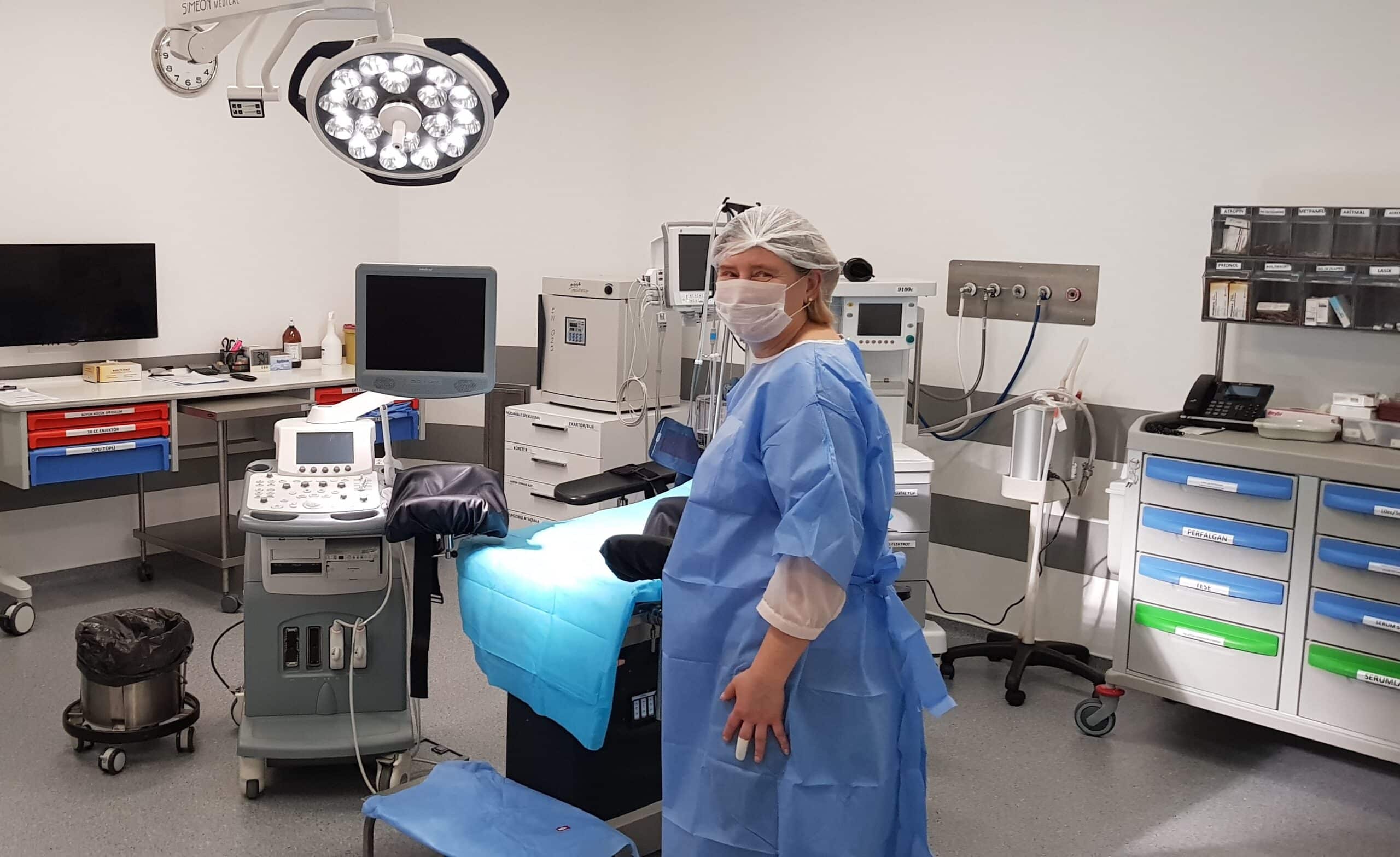
The clinics are equipped with modern operating theatres, private patient rooms, and advanced laboratories for andrology, embryology, and cryopreservation. Recovery rooms and dedicated areas for patient care ensure comfort throughout the treatment process.
Medical teams consist of highly qualified reproductive specialists and embryologists, most with over 10 years of experience and ESHRE accreditation.
Many clinics also have multilingual international staff who speak up to 12 languages — including English, French, German, Italian, and Spanish — to ensure clear communication and individualised support for patients from around the world.
Single women can undergo IVF in Northern Cyprus using sperm donation. While donation is generally anonymous, some clinics offer the option of open sperm donation via Denmark.
Lesbian couples are welcome in Northern Cyprus and do not need to be married to access treatment. While shared motherhood is not widely offered, sperm donation is available — often anonymously, though open donation via Denmark may be possible.
Egg donation is legal and widely available up to the age of 55. All donations are anonymous, and additional medical testing ensures suitability for treatment.
Open egg donation is not common, but some clinics work with international agencies that can arrange for open egg donors to travel to Northern Cyprus. This allows greater transparency in selected cases.
While egg donation must remain anonymous by law, some clinics offer double donation with both open egg and sperm donors — coordinated through specialised agencies. This option is available in very few clinics and requires early planning.
IVF with egg donation is officially limited to age 55. Treatments beyond this age are extremely rare and subject to strict medical and legal approval, which is difficult to obtain.
Gender selection is not officially prohibited. Through PGT-A testing, embryos can be screened for X and Y chromosomes, allowing patients to choose the desired sex. Most clinics offer this discreetly.
Open sperm donation is not standard but may be available through Danish banks. Only a few clinics in Northern Cyprus offer this option — it’s important to confirm availability in advance.
Although rare, a few clinics accept known donors. In such cases, private donors can travel to Northern Cyprus, provided the clinic supports the process and all required screenings are completed on-site.
Recently, a small number of clinics have begun offering embryo adoption at lower costs. This option is still rare and not widely advertised, but it can be a more accessible path for some patients.
FAQs
See the most frequently asked questions
IVF Success Rates
Success rates can vary depending on how they are measured. Some clinics base their statistics on positive pregnancy tests, while others report clinical pregnancies (with heartbeat) or live births.
Since there is no universal standard for reporting IVF outcomes, success rates are not directly comparable across clinics. Each clinic uses its own methods and definitions, which can lead to significant differences in how results are presented.
Understanding IVF Success Rates
Most clinics report their success rates based on the first positive bHCG test. However, many acknowledge that miscarriage rates also need to be considered.
Ideally, success rates should reflect the outcome of a full cycle, but not all clinics follow the same reporting standards.
Individual circumstances play a crucial role. No two patients are alike, and factors such as age, overall health, and lifestyle have a significant impact on the chances of success. Overweight or health issues can reduce success rates, while being in good physical condition may increase them.
When comparing overseas clinics with local facilities, the results can be surprising. This doesn’t necessarily mean that one is better than the other. Many international clinics specialise in egg donation, which tends to have higher success rates — often around 80% on average across clinics and countries (excluding miscarriage rates). In some cases, clinics promote egg donation heavily, which can influence reported outcomes.
In contrast, success rates for women over 40 using their own eggs are lower, typically ranging from 15% to 60%+, depending on age. Still, these clinics may offer advanced technologies and personalised care.
Preimplantation Genetic Diagnosis (PGD) is rarely offered due to high costs and legal restrictions. However, when used, it can significantly improve outcomes. A healthy embryo has a typical implantation rate of 80%, and with NGS, the cumulative success rate can reach up to 95% after three cycles.
“An estimated success rate can be provided after reviewing your hormone levels, blood test results, medical history, and sperm analysis.”
Nathalie Wiederkehr
Founder
Success Rates in Northern Cyprus
Based on bHCG blood tests performed on day 11, IVF procedures in Northern Cyprus have shown the following success rates (example from one clinic). These rates do not include miscarriage rates, which are estimated at 10–15% for women around the age of 20.
The risk of miscarriage increases significantly after the age of 35, and this must be taken into account when interpreting early pregnancy success.
With your own oocytes
With egg donation
IVF with own oocytes and gender selection
IVF with Egg Donation and Gender Selection
In a nutshell:
Some clinics report that women under 39 may achieve pregnancy within one to three IVF cycles.
For women over 40, egg donation significantly increases the chances of success.
Choosing IVF with NGS (Next Generation Sequencing) can further improve outcomes — offering up to 15% higher success rates compared to standard IVF.
FAQs
See the most frequently asked questions
The Cost of IVF Treatment
It’s important to understand the full pricing structure of any treatment option, as unexpected costs can arise. Keep in mind that some treatments are marketed as particularly beneficial — often for promotional reasons — so it’s worth looking at the details carefully.
Typical components that should be included in the treatment cost
Additional costs that are usually not included in IVF packages
Pricing plans
ICSI + own occyte from
€3’000
Average price per cycle
EGG Donation from
€5’000
Average price per cycle
Embryo donation from
€7’000
Average price per cycle
Embryo adoption from
€4’000
Average price per cycle
pgd gender selection from
€6’000
Average price per cycle
social freezing from
€2’000
Average price per cycle
What clients say
Start your journey to motherhood today
We hope this guide has given you valuable clarity about IVF treatment options in Europe.
Thanks to our many years of experience supporting patients and visiting clinics abroad – sometimes alongside Swiss doctors – we’ve developed a deep understanding of where patients are truly in good hands.
If you’re ready to take the next step and are looking for a trusted European clinic, we’re here to support you. Let us guide you through this sensitive and personal journey – with clarity, warmth, and care.
Contact us today to receive personalised support and find the clinic that’s right for you.
You don’t have to navigate this alone.
We truly believe that with the right support, your dream of becoming a parent can come closer to reality — and feel a little less overwhelming.
We’re sending you strength and heartfelt encouragement for your next steps.
Nathalie & team